tuberculosis




Tuberculosis (commonly abbreviated to TB, short for tubercle bacillus) encompasses an enormously wide disease spectrum affecting multiple organs and body systems predominantly caused by the organism Mycobacterium tuberculosis. A small proportion can also be caused by Mycobacterium bovis.
Epidemiology
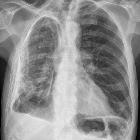
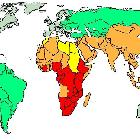
Although tuberculosis continues to be very common in developing nations. Approximately 10 million people globally per year have positive exposure to tuberculosis . In Western industrialised populations it has become uncommon but is increasing in prevalence among immunocompromised patients, particularly those with HIV/AIDS. An estimated 5% HIV patients have Mycobacterium tuberculosis infections, which become clinically apparent when CD4+ counts drop to below 350 cells/mm, typically with findings of post-primary pulmonary tuberculosis .
Clinical presentation
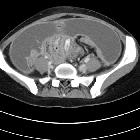
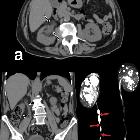
Clinical presentation will depend upon the morphology of infection and location. These are discussed in separate articles.
- morphology
- location
History and etymology
Aristotle is usually credited as being the first to recognize the contagious nature of the disease. Discovery of the specific infectious agent, the tubercle bacillus (Mycobacterium tuberculosis), did not occur for several millennia until it was isolated by Robert Koch in 1882 . M. tuberculosis was previously known as Koch bacillus and tuberculosis known as Koch disease. It was also historically known as consumption due to the severe associated weight loss.
Siehe auch:
- pulmonale Tuberkulose
- Kavernöse Lungenläsionen
- Tuberkulose des ZNS
- Pleuraplaques
- Miliartuberkulose
- Nierentuberkulose
- mycobacterium tuberculosis
- miliare Lungenherde
- pleurale Tuberkulose
- primary pulmonary tuberculosis
- Tuberkulose des Peritoneums
- tuberkulöse Spondylitis
- tuberkulöse Halslymphknoten
- urogenitale Tuberkulose
- post primary pulmonary tuberculosis
- tuberkulöse Meningitis
- Pleuritis exsudativa
- Tuberkulose der Mamma
- pelvine Tuberkulose
- multiresistente Tuberkulose
- tuberkulöse Otomastoiditis
- Tuberkulostatikum
- post-primary pulmonary tuberculosis
und weiter:
- Pleurakuppenschwielen
- Dünndarmileus
- verkalkte mediastinale Lymphknoten
- Tumoren der Hypophysenregion
- Splenomegalie
- Skoliose
- arteriovenöse Malformationen der Lunge
- umgekehrtes Halozeichen Lunge
- apikale Pleurakappe
- reverse halo sign
- linitis plastica
- Fibrothorax
- Chylothorax
- Amyloidose
- renal papillary necrosis (mnemonic)
- pulmonale und mediastinale Sarcoidose
- mediastinal lymphoma
- radiation-induced pulmonary fibrosis
- Gynäkomastie
- Gibbus
- crazy paving-Muster
- Vergrößerung der zervikalen Lymphknoten
- bilaterale hiläre Lymphadenopathie
- Erythema nodosum
- einzelne Pleuraraumforderung
- thorakale Plombage
- testicular epidermoid
- Tuberkulose der Milz
- Plombage
- Hughes-Stovin-Syndrom
- differential of chronic alveolar opacities
- bilaterale axilläre Lymphadenopathie
- retikuläres Muster
- differential diagnosis of calcified pulmonary densities
- zentrilobuläre Lungennoduli
- hyperdenser Lymphknoten
- tuberculous empyema
- Nebennierenläsionen
- hypertrophic olivary degeneration
- Raumforderungen der Trachea
- Anthrakose
- beschleunigte Skelettreifung
- melioidosis
- extrapulmonale Manifestationen der Tuberkulose
- chronic bilateral airspace opacification
- Skrofeln
- differential diagnosis of unilateral axillary lymphadenopathy
- hyperechoic liver
- diffuse Trachealwandverdickung
- bladder calcification (mnemonic)
- Nasenseptumdefekt
- CNS manifestations of AIDS
- Thorakoplastik
- abdominelle und pelvine Verkalkungen
- dens erosion
- papillary necrosis (mnemonic)
- Tuberkulose von Leber und Milz
- generalised increased liver echogenicity
- Tuberkulose der Leber
- opportunistische Infektionen
- Tuberkulose der Wirbelsäule und des Spinalkanals
- solitary sclerotic bone lesion with a lucent centre
- pulmonary upper zone involvement (mnemonic)
- Vergrößerung der Glandula parotis
- diffuse Trachealverengung
- Tuberkulose des Larynx
- lytic bone lesion surrounded by marked sclerosis (mnemonic)
- pulmonary manifestations of lymphomatoid granulomatosis
- cystic cervical mass adjacent to the angle of mandible
- idiopathische granulomatöse Mastitis
- small bowel folds (differential diagnoses)
- Knochenläsionen mit Sequester
- Ranke complex
- multifocal spinal tuberculosis
- galaxy sign
- peritoneal tuberculosis following infliximab therapy
- Phemister triad
- chronic primary adrenal insufficiency
- Tuberkulose des Ösophagus
- Großgefäßvaskulitis
- Isoniazid
- tubercular esophagocutaneous fistula
- Nachweis Tbc
- tuberkulöse Lymphadenopathie
- chronic tuberculosis
- Merkspruch Nasenseptumperforation
- gastrointestinale Fistelbildungen
- discrete colonic ulceration
- ileozökale Tuberkulose
- MDR Tuberkulose
- Assmanninfiltrat
- tuberculosis in a child
- Handlungsempfehlung für den Umgang mit Patienten mit vermuteter Tuberkulose
- Ursachen für Perfusionsdefekte in der Lungenventilations / -perfusionsszintigraphie
- triad of Phemister


 Assoziationen und Differentialdiagnosen zu Tuberkulose: